

BioByte 166: A Deep Dive into Progressable Binders and Collaboration Between Bacteria to Survive Antibiotics


Reminder to apply to attend our fourth annual AI x Bio Summit at the NYSE on July 23rd! Speakers have been announced, view the full list + apply for your spot here.

What we read
Blogs
Progressable Binders: The Binders that Matter [Law and Kamichetty, Xaira Therapeutics, June 2026]
Why it matters: This note from the CSO and CTO at Xaira Therapeutics broadly outlines how the company approaches de novo protein design efforts to ensure that molecules become developable biologics candidates. Specifically, they describe a framework that evaluates molecules on their path to becoming high affinity, drug-like functional binders.
Generative AI tools for biology continue to push the limits of de novo protein design, with scientists being able to make entirely new protein binders and antibodies. To that end, the success of such methods is usually based on metrics such as binder hit rates and derived binding affinity. However, recent blog post from Boltz noted that binding affinity metrics calculated from surface plasmon resonance (SPR) or biolayer interferometry (BLI) assays can produce ambiguous results due to confounding effects such as non-specific binding of a target to an experimental plate rather than a protein on the plate. In this blog, the authors from Xaira expand on the note from Boltz to detail how the company is characterizing potential binders at each milestone of development to optimize for the greatest likelihood of success.
Xaira uses the term “progressable binder” to refer to “molecules that satisfy not just binding, but the broader set of functional, biophysical, and biological constraints required to advance into therapeutics” such as functional activity, appropriate immunogenicity, and computational developability. To achieve these constraints, putative binders are subject to a three-stage, sequential process of development spanning studies of binding, drug-like characteristics, and therapeutic functionality.
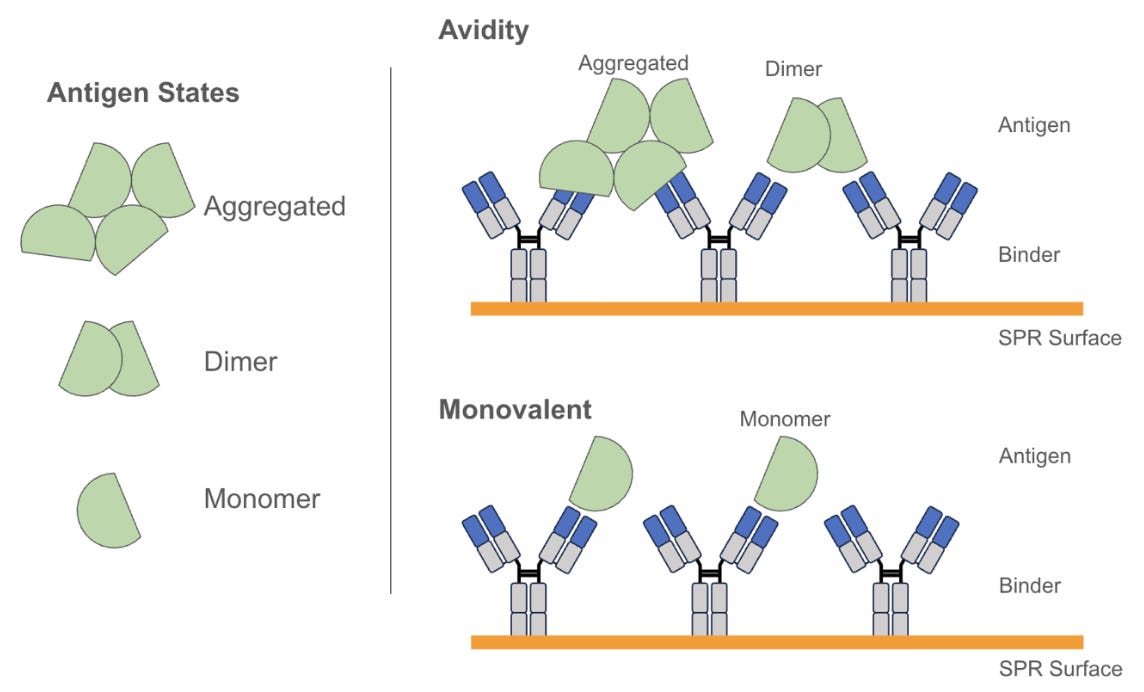
The first stage determines whether or not a candidate is a true binder, beginning with soluble antigen prep and quality control. To ensure that a test is not limited by measurement error, it is essential that soluble antigens are as close to the expected native state while also being stable and robust against aggregation. Focusing specifically on antibody design, the authors point to the effects of avidity where a single antibody can bind to multiple antigen and skew binding metrics, proving that quality control and reagent characterization is hardly a trivial endeavour. In terms of actual binding measurements, Xaira requires that early-stage binders display an affinity of 100 nM or tighter to proceed, noting that this baseline has been found to strike a balance between promoting diversity of initial candidates and enabling tractable downstream optimization. Crucially, these affinity measurements must come from clean sensogram readouts or flipped-orientation assays. Importantly, Xaira recommends that binder design efforts report zero-shot success rates as the ratio of validated binders, rather than initial hits, to the number of tested designs.
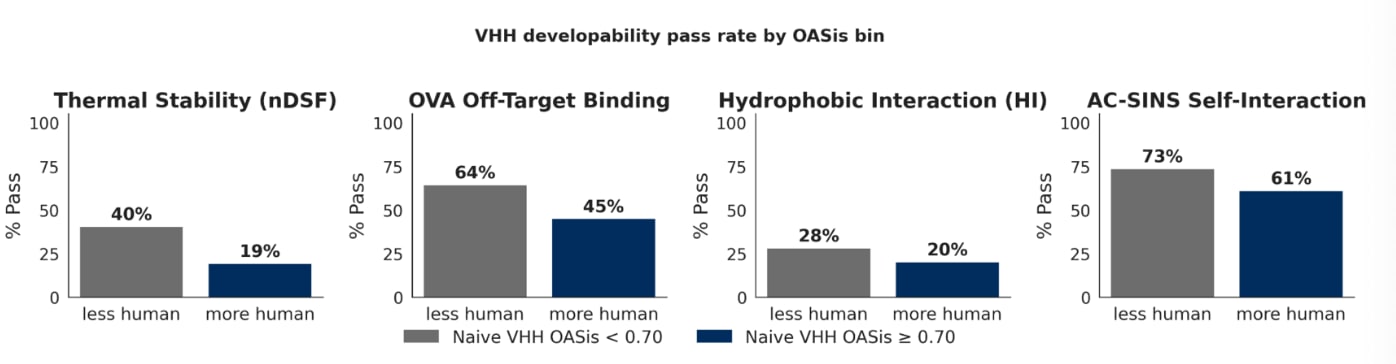
Once true binders have been identified, the next stage of development moves to measuring drug-like characteristics such as developability, chemical stability, and more. Developability covers traits such as the ability to be expressed in high-throughput mammalian systems and general thermal stability. Scientists also investigate potential sequence liabilities such as regions that would disrupt canonical disulfide bonds necessary for folding and N-linked glycosylation motifs that could interrupt binding events. One additional crucial aspect of this stage is studying immunogenicity, especially since there are no assays that can fully report immunogenicity in humans before clinical studies. To mitigate this risk, Xaira uses in silico tools to determine how “human-like” a candidate is in terms of sequence and structure, a property which has shown to be a decent proxy for immunogenicity. Interestingly, the authors note that developability and immunogenicity can often present as contrasting objectives, with more human designs being less optimized for developability in camelid animals. Xaira is also incorporating sequence and structure-based constraints into their generative models to ensure that the bulk of antibody interactions are CDR-mediated rather than other non-functional interactions.
After a potential binder has been validated as a true binder and screened for developability, the final step of development measures functional activity and therapeutic effect. While this step becomes program-specific based on whatever disease or condition is being targeted, some general steps include characterizing agonism or antagonism, ligand-receptor inhibition, intra-cell trafficking, and the engagement of the immune system. The authors note that the Xaira’s “internal programs…enter lead optimization only when we have obtained a structurally and functionally diverse panel of progressable binders.” This ensures that there is still ample room to optimize across binding geometry, CDR sequence, and structure rather than being constrained by the limits of a pool of highly similar sequences. All of this effort may still yield no therapeutically useful binders in the clinic, but it’s fascinating to understand how principled steps can be taken to derisk drug development efforts, especially in a new age where proposing thousands of potential candidates is relatively cheap with available computational tools.
Papers
Antibiotics stimulate protein transfer to persister cells [Wen et al., Science, June 2026]
Why it matters: Wen et al. show that bacteria can synergistically collaborate to survive antibiotics. While “persister” cells become dormant, neighboring cells begin to export their proteins, which the persister cells rapidly uptake. This demonstrates a collective survival mechanism and uncovers important regulators of this Horizontal Protein Transfer (HPT) axis, providing a toolset of proteins that could be used to either turn HPT into a bioengineering tool or target it with antibacterial drugs.
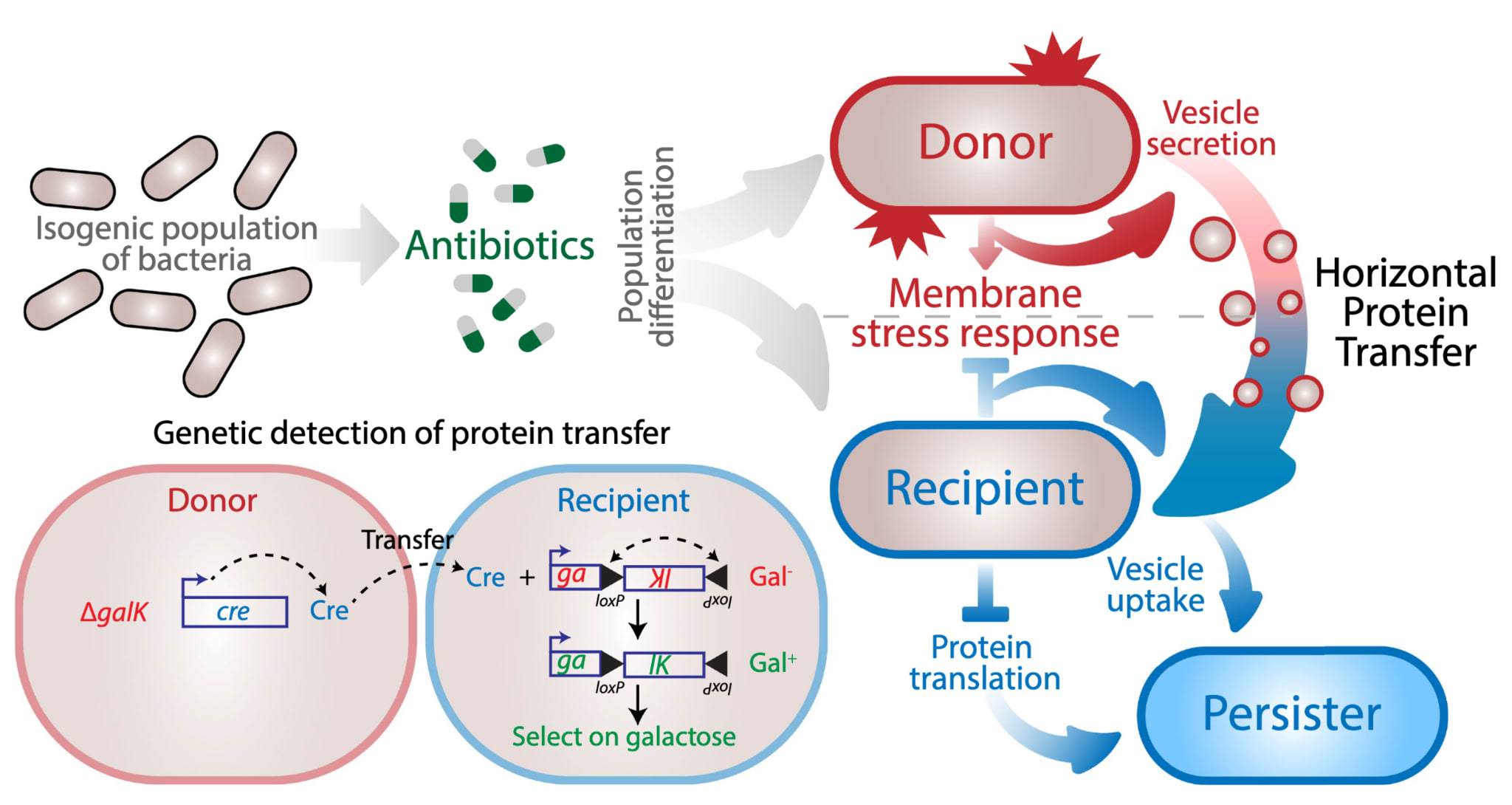
Bacteria are known to exchange DNA, RNA, metabolites, and proteins. Horizontal gene transfer is the most well-known version of this: it often involves pili-mediated conjugation and plasmid transfer, moving mobile genetic elements and adaptive genes that accelerate population-level evolution toward greater fitness under new challenges. However, much less is known about when and how bacteria pass functional proteins to each other. Wen et al. set out to uncover this mechanism. They induced HPT with low amounts of antibiotics, especially ciprofloxacin and also carbenicillin, and tracked whether a donor cell could pass Cre recombinase to a recipient. The donor lacks galK, meaning it cannot grow on galactose plates, but it expresses Cre. The recipient carries a defective galK gene whose internal inversion can be rescued by Cre-mediated recombination. If Cre gets into the recipient, it flips the gene back into the right orientation, restores galactokinase activity, and allows the recipient to grow on galactose. Miraculously, antibiotic treatment induced transfer of Cre recombinase, with ciprofloxacin increasing transfer by more than 4,000-fold!
Two main questions arose: was Cre protein or DNA/RNA being transferred, and what mediated this process? The authors first showed that Cre DNA did not transfer in the natural setting without electroporation, arguing against DNA transfer. Then they used a clever protein-stability test: Cre was tagged with an SsrA degradation tag, causing Clp proteases to degrade it. Normal Cre transferred, Cre-SsrA did not, and deleting clpP rescued Cre-SsrA transfer by preventing protein degradation. Since Cre mRNA levels did not explain this pattern, the assay was responding to transferred Cre protein. Next, they found transfer could occur through cell-free donor supernatant, meaning direct cell contact was unnecessary. But purified Cre alone transferred far less efficiently than donor supernatant, suggesting Cre was protected inside a larger complex. Density gradient ultracentrifugation showed that the strongest transfer activity came from light vesicle fractions, especially F2/F3, which also contained the most Cre protein. Fluorescence imaging and cryo-ET confirmed that Cre colocalized with membrane vesicles, establishing that HPT was vesicle-mediated.
To identify what drives these vesicles, the authors performed mass spectrometry and found PspA, part of the phage shock protein (Psp) membrane-stress response. PspA was especially interesting because it is an ESCRT-III–like membrane-remodeling protein. Deleting the full psp regulon in donors nearly abolished transfer, reducing donor supernatant transfer by more than 8000-fold. So antibiotic stress pushes some cells into a Psp-active donor state that exports protein-rich vesicles. Surprisingly, the best recipient cells showed the opposite behavior: they were relatively Psp-suppressed, and activating Psp in recipients reduced uptake. Single-cell transcriptomics showed that these protein-competent recipients were also slow-growing and persister-like, with lower ribosomal gene expression and higher expression of persistence-associated genes like hipA, relA, and spoT. HipA was the key factor here: deleting it reduced uptake, while overexpressing it increased uptake by ~100-fold even without ciprofloxacin.
Altogether, the model is that antibiotics induce a new metapopulation survival strategy based on cooperation between two states of bacteria. In response to antibiotic stress, an isogenic bacterial population splits into complementary states: some cells activate the Psp membrane-stress response and become donors, exporting protein-rich vesicles, while others enter a HipA-high, slow-growing persister-like state, suppress Psp, and become recipients that are better at taking up those vesicles. This division of labor is useful because persisters survive antibiotics by slowing translation, but that also limits their ability to make new proteins.
Notable deals
Beeline Medicines adds $126.3M in Series A extension bringing total Series A funding to $426.3M. Founded only one year ago, the biotech is making a beeline toward the clinic, with funding from the extension supporting the advancement of several assets into and through trials. The company is armed with an extensive immunology portfolio, spanning its lead, afimetoran—a once-daily small molecule TLR7/8 inhibitor intended to treat lupus, with sights set on oral best-in-class status—to candidates addressing atopic dermatitis and certain rare autoimmune and inflammatory disorders through a variety of unique mechanisms and pathways. Afimetoran is currently awaiting readouts from its Phase 2 which are projected to arrive later this year, while Beeline’s runner-up is currently undergoing Phase 1b trials. At least two more candidates are poised to enter the clinic, making for quite the buzz for the BMS spinout. Investors include BMS, Bain Capital, and the Canada Pension Plan Investment Board (CPP Investments), with participation from several members of Beeline’s management.
QuantumCell licenses Alzecure Pharma’s lead Alzheimer’s asset and platform in deal worth potentially over $2.2B. Alzecure’s lead candidate, ACD856, is a small molecule modulator developed from the company’s platform, NeuroRestore, which has shown promise for treatment of Alzheimer’s, Parkinson’s, and even depression via its apparent ability to enhance neuronal communication and cognitive function, as demonstrated in preclinical studies. The asset recently received Phase 1b readouts earlier this month which presented the molecule’s safety and tolerability. The deal has Alzecure receiving $12M in upfront payments—$5M of which includes direct investment in the company itself—with the rest being tied to development and commercialization milestones. Should the drug make it to market, royalty payments would be an addition to the existing $2.2B deal value. Little is known of the licensor, QuantumCell, a Danish stealth startup described as having an “AI-native, quantum-enabled platform for next-generation neuropsychiatry therapeutics.”
Boulevard Bio promises up to $1.6B for global rights to preclinical trispecific TCE asset from China-based Metis TechBio. The autoimmune asset, MTS-128, is part of an emerging class of T cell engagers—a hot commodity in general for pharma at present—which have the ability to modulate more biological mechanisms than the traditional bispecific class. The drug candidate is one of many in Metis’ broad portfolio spanning immunology, oncology, metabolic, and CNS indications. The deal follows Metis’ public offering on Hong Kong Stock Exchange last month, with the company claiming to be the “first AI-powered drug delivery company to list [on the exchange].” The Chinese biotech also claims to own the “world’s largest proprietary LNP lipid library with over 10 million lipids, per the coverage by Fierce Biotech. Less is known about Boulevard beyond their backing by Deerfield and their reported pursuit of innovative immunotherapies. Per the deal, Boulevard will pay Metis $20M upfront, with the rest of the value coming from milestone payments and tiered royalties pending the drug’s entrance to the market.

In case you missed it
Anthropic launches AI drug discovery program, joining tech giants in betting on healthcare
Anthropic is starting a drug discovery program. They’re targeting “neglected” diseases that pharma would not target. Notable in this effort is the previous acquisition of Coefficient Bio, which was building tools to help the first stage of drug discovery - deciding which targets to go for and why. Alongside this announcement, Anthropic released Claude Science, a software platform that integrates data analysis, scientific tooling, scientific visualization, and even manuscript preparation for scientists.
Medra Launches AI Experimentalist and Announces DARPA Collaboration
Medra unveils its AI Experimentalist, an AI system designed to do full scientific workflows - from literature search, scientific reasoning, and data analysis, to actual design and execution of experiments. This builds upon Medra’s autonomous lab Medra Lab 001 and the internal Physical AI which allows autonomous robotic manipulation to use machines within the lab. Unlike other AI Scientists - which are restricted to in silico tasks - the AI experimentalist is poised to be able to continuously design, execute, and learn from its own scientific experiments. Medra is collaborating with DARPA to advance the AI Experimentalist’s capabilities in turning experimental goals from natural language to experimental protocols that can be continuously developed and optimized by the AI Experimentalist.
What can we learn from yet another failure? A discussion on treatments for Parkinson’s disease in the wake of the failure of Denali x Biogen LRRK2 kinase inhibitor in Phase 2 trials.
J. Kwok: A Living Venn Diagram of the Biotech Ecosystem
What we liked on socials channels


Events

An event not to be missed: come to our flagship AI x Bio Summit! Hosted at the New York Stock Exchange on July 23, 2026. Talk to leaders in AI x Bio from firms like Anthropic, Enveda, Formation Bio, and on. Apply here → https://events.decodingbio.com/summit2026.
Field Trip
Did we miss anything? Would you like to contribute to Decoding Bio by writing a guest post? Drop us a note here or chat with us on Twitter: @decodingbio.